

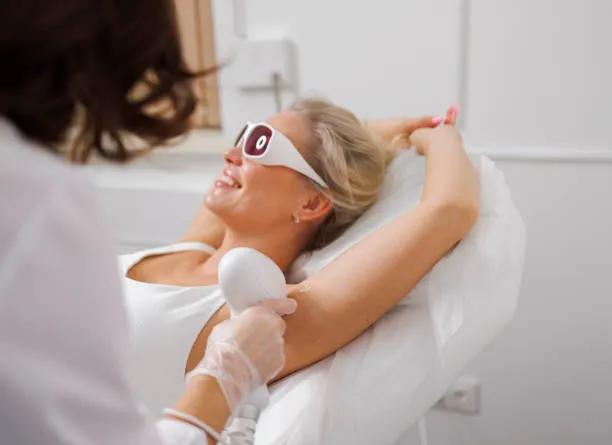
Many people find that certain areas of body hair seem more persistent than others, even after regular grooming. Laser Hair Removal Abu Dhabi may help reduce the appearance of this stubborn growth by targeting hair follicles with concentrated light. Results vary from person to person, but a planned course of sessions can make hair finer, slower to return, and less noticeable over time.
Why Some Body Hair Seems Stubborn
Hair grows in cycles, and not every follicle is active at the same time. Shaving cuts hair at the surface, while waxing removes the visible strand from the root; neither method permanently disables the follicle. As a result, hair can return, sometimes seeming just as dense as before.
Some areas may also be harder to manage because their hair is coarse, grows quickly, or covers a broad surface. Hormonal changes and individual growth patterns can influence how much hair appears and how often it returns. Laser treatment works differently from routine grooming: its light is absorbed by pigment in the hair and directed toward the follicle.
How Laser Treatment Targets Hair
During a session, a suitable device delivers pulses of light to the treatment area. The pigment in the hair absorbs that light, producing heat that can affect the follicle’s ability to grow hair. The surrounding skin is considered when settings are selected, since hair and skin characteristics vary.
Laser treatment is generally most effective when a follicle is in an active growth phase. Since follicles move through their cycles independently, one appointment cannot target every hair at once. A series of sessions, spaced according to professional guidance, is usually needed to address more of the growth over time.
What Makes Hair More Responsive
Hair Color and Coarseness
Dark, coarse hair often responds more readily because it contains more pigment for the laser to target. Very light, gray, red, or white hair may respond less predictably, as it has less of the pigment that absorbs the light. Individual results depend on the device, hair characteristics, and treatment plan.
Skin Tone and Device Selection
Different devices and settings suit different combinations of skin tone and hair color. A qualified professional can assess the area and choose an approach intended to target the hair appropriately. An initial consultation also gives the person an opportunity to discuss previous hair-removal methods, skin sensitivity, and expectations.
The Treatment Area
Some body areas may show a more noticeable reduction than others. Hair density, growth cycles, and hormonal influences all play a part. A professional can explain what is realistic for the specific area rather than promising complete or permanent hair removal.
Can It Help With Particularly Persistent Growth?
Laser treatment can often reduce hair that repeatedly returns after shaving or waxing. With a completed course, many people notice slower regrowth, finer strands, and less overall density. Some may also find that grooming becomes less frequent.
However, “stubborn” does not mean that every follicle will respond equally. Hair may remain in some areas, and maintenance sessions may be recommended if new growth appears later. Hormonal shifts can also encourage fresh growth, so results may change over time. A realistic goal is usually long-term reduction, not a guarantee that every hair will disappear permanently.
What to Expect During a Session
Before treatment begins, the professional reviews the person’s skin and hair, the area being treated, and any relevant health considerations. The area is prepared according to the provider’s instructions, and protective eyewear is used. During the session, the device is moved across the skin in a planned pattern.
The length of an appointment depends on the size of the area. A small area may take less time than a larger one. The person may notice brief warmth or a snapping sensation as pulses are delivered, though the experience differs among individuals and devices. Questions about comfort or suitability can be discussed before the session starts.
Preparing for a Treatment Plan
A consultation helps establish whether laser treatment is appropriate and what results may be achievable. The professional may ask about hair-removal habits and explain how to prepare the skin. Following those instructions helps make the session more consistent.
People are commonly advised to avoid tanning and to follow specific guidance about shaving or other grooming before an appointment. Because preparation can differ by device and individual, the provider’s directions should take priority over general advice. It is also useful to discuss medications or skin conditions that could affect treatment planning.
Choosing Realistic Expectations
Laser treatment is a gradual process rather than an instant solution. Hair reduction typically becomes clearer across multiple sessions, as more follicles are reached during active growth. Progress can vary between body areas, and the same person may see different results in different locations.
A clear plan should outline the expected number and spacing of sessions, how progress will be assessed, and whether maintenance may be useful. Before-and-after photographs, taken consistently and with permission, can help track changes without relying only on memory. Honest communication supports a more comfortable and informed experience.
Frequently Asked Questions
Can laser treatment remove every stubborn hair?
It can reduce many hairs, but complete removal cannot be guaranteed. Some follicles may continue producing hair, and new growth can appear later. The degree of reduction depends on hair color, skin tone, treatment area, and individual growth patterns.
How many sessions may be needed?
The number varies. Multiple sessions are generally required because hair follicles are active at different times. A qualified professional can suggest a schedule after assessing the area and the person’s response.
Does the treatment work on fine or light hair?
Fine or lightly pigmented hair may be less responsive because it offers less pigment for the laser to target. A consultation can clarify whether the hair is likely to respond and what alternatives may be appropriate.
Is it suitable for every body area?
Many areas can be assessed for treatment, but suitability depends on the person, the specific area, and the device used. A professional evaluation is the best way to determine whether a treatment plan is appropriate.
A Practical Option for Lasting Hair Reduction
Laser treatment may be a useful option for people who are tired of repeatedly managing coarse or persistent body hair. Its main benefit is gradual reduction: regrowth may become finer, slower, and less dense after a series of sessions. Results are individual, and maintenance may be needed, but a careful assessment and realistic plan can help set clear expectations.